
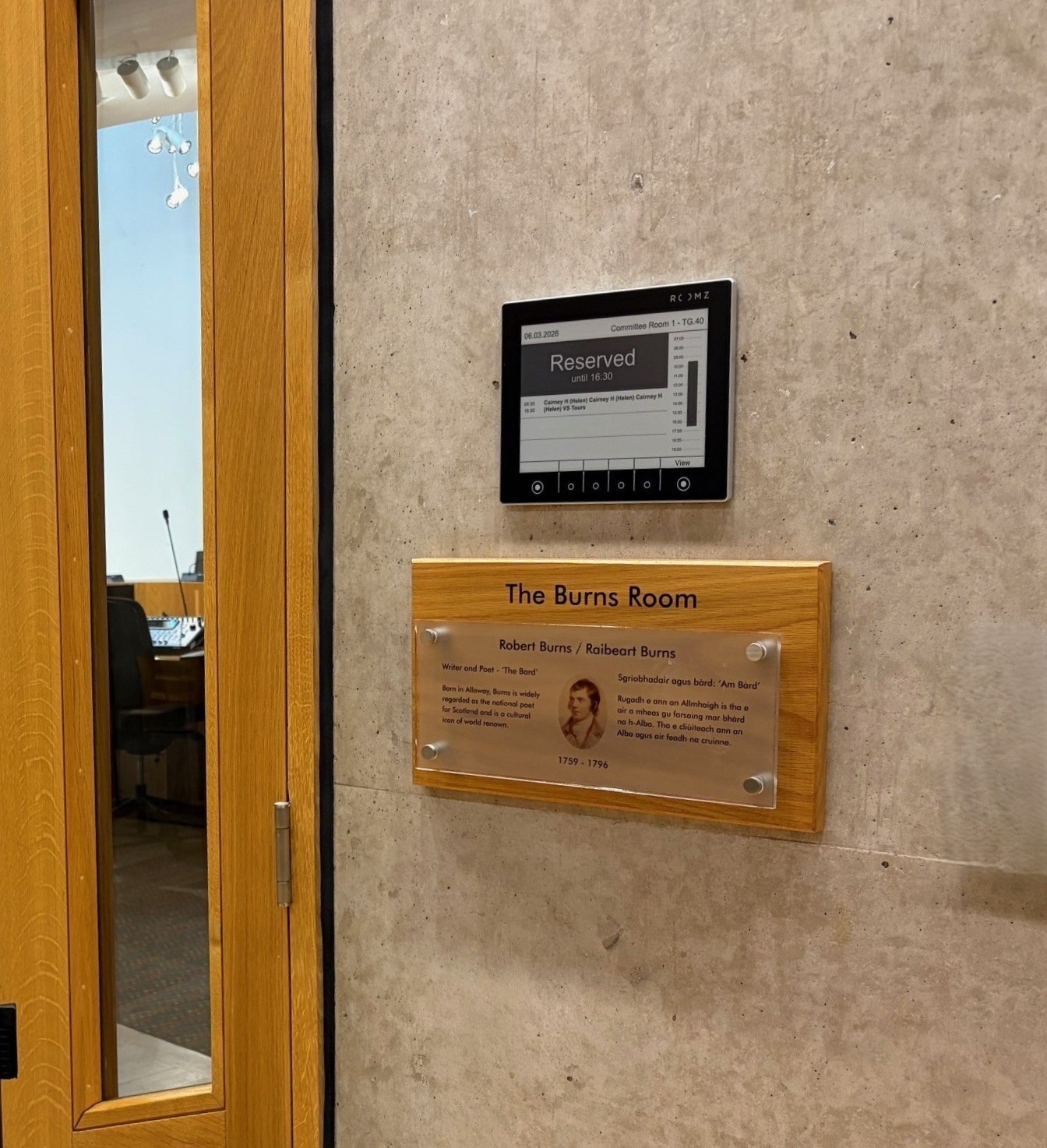
“The key benefit of the ROOMZ proposal was the screens and the ability to place them anywhere. They are very easy to set up and they look good too.”
Gary Gibson
Strategy and Performance Manager
The Scottish Parliament
Located in central Edinburgh, the Scottish Parliament manages a complex workplace environment, with the aim of supporting a more diverse, hybrid workforce through smarter use of workspaces.
To modernize its workspace management and gain flexibility, the Scottish Parliament deployed ROOMZ solutions across its offices, including 35 meeting room booking displays, along with huddle and desk sensors to manage non-bookable workspaces.
Before implementing ROOMZ, the Parliament faced several operational challenges, as Gary Gibson, Strategy and Performance Manager, explains:
“We needed to replace our existing booking system and LED screens that were end of life. We wanted a system that would connect to our M365 environment rather than being standalone, as our strategy was to fully adopt Outlook room calendars.”
Flexible installation on any surface
ROOMZ stood out for its wireless infrastructure and ease of deployment. The battery powered e-ink displays allowed screens to be installed in locations where power or network cabling was not possible.
“The key benefit of the ROOMZ proposal was the screens and the ability to place them anywhere, even on glass. They are very easy to set up and they look good too,” adds Gary Gibson.
Improving visibility and workspace utilization
To complement the room booking displays, the ROOMZ Flightboard was introduced to provide a real time overview of meeting rooms by showing current and upcoming bookings.
In addition, ROOMZ sensors were installed in ad hoc desks, quiet booths, and recently meeting rooms to manage no-shows. This provides valuable utilization insights while also enabling users to view the availability of both bookable and non-bookable spaces.
“The ability for users to see which spaces are available from the same graphic, including non-bookable spaces, has meant those areas are used more frequently,” notes Gary Gibson.
“We can now clearly see utilization data showing which spaces are being used and which are not, helping us better serve our users in the future.”
Read more Read less

